 English
 Indian
 العربية
 Español
 Deutsch
 Türkçe
 Русский
 Français (Afrique)
A New Race in an Unexpected Place
With the most popular Ironman 70.3 races in Europe selling out quickly, I wasn't decided for a while which race to pick for the upcoming season. Then I read about the new race in Baku, Azerbaijan, and decided to give it a try.
With only a three-and-a-half-hour flight from Dubai, it was an easy choice. I booked a direct Flydubai flight with as much baggage allowance as possible and was ready for a new adventure.
With a visa on arrival for UAE Emirates card holders, costing US$40, I arrived on Tuesday with the race on Saturday. For the half-hour drive into the capital, I had booked a large transporter
for only US$20. Although my flight was almost three hours late, the driver patiently waited for me with a pickup sign. It worked perfectly and was also the right decision for my return to the airport.
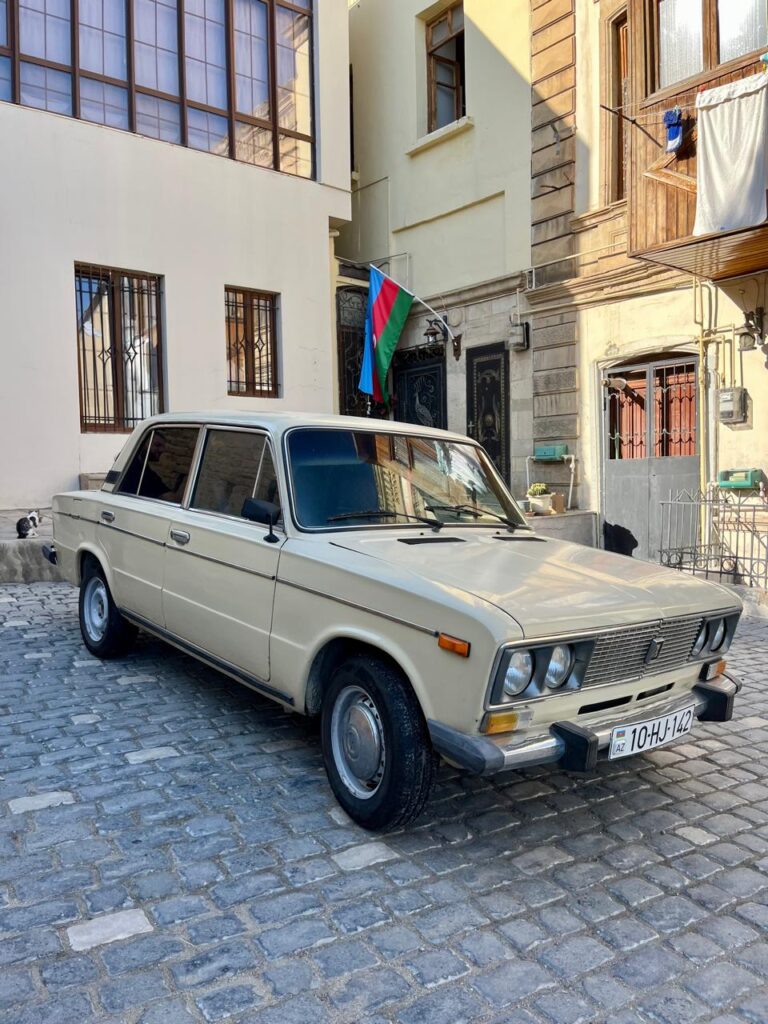
For my stay, I had chosen a small boutique hotel in the city center, located in the middle of a pedestrian area and booked at a very reasonable price. I was pleasantly surprised by the spacious room, which gave me enough space to reassemble my bike. Finding the hotel was a little more difficult, as there were no signs, and you shouldn't expect too many people around Baku to speak English.
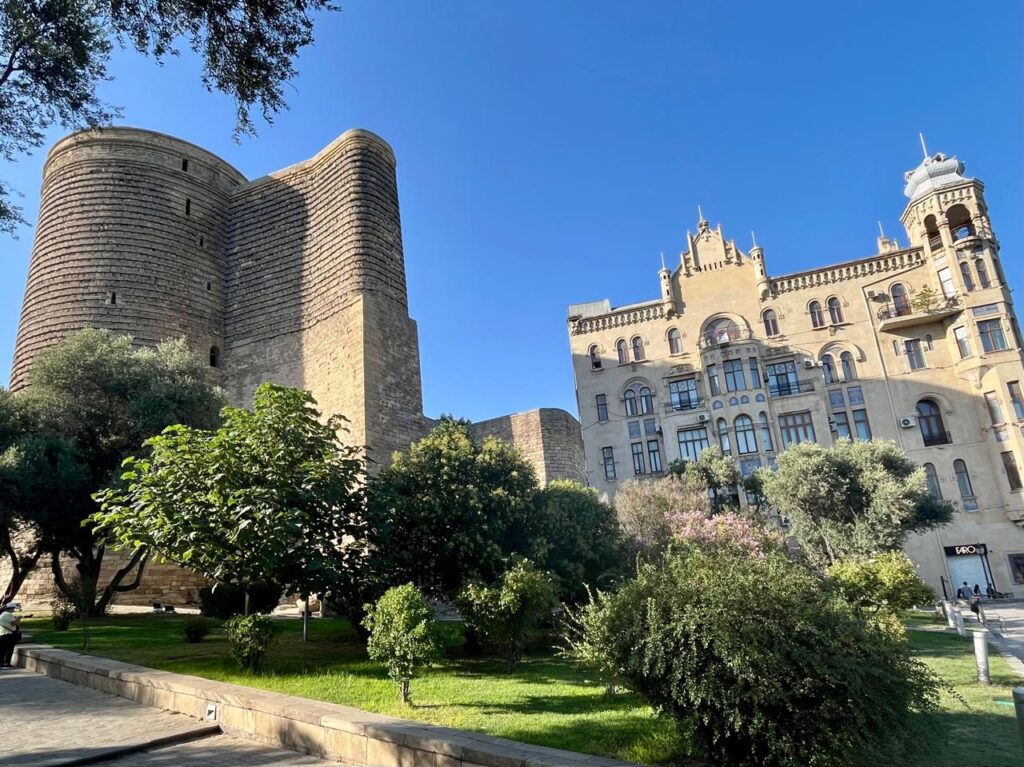
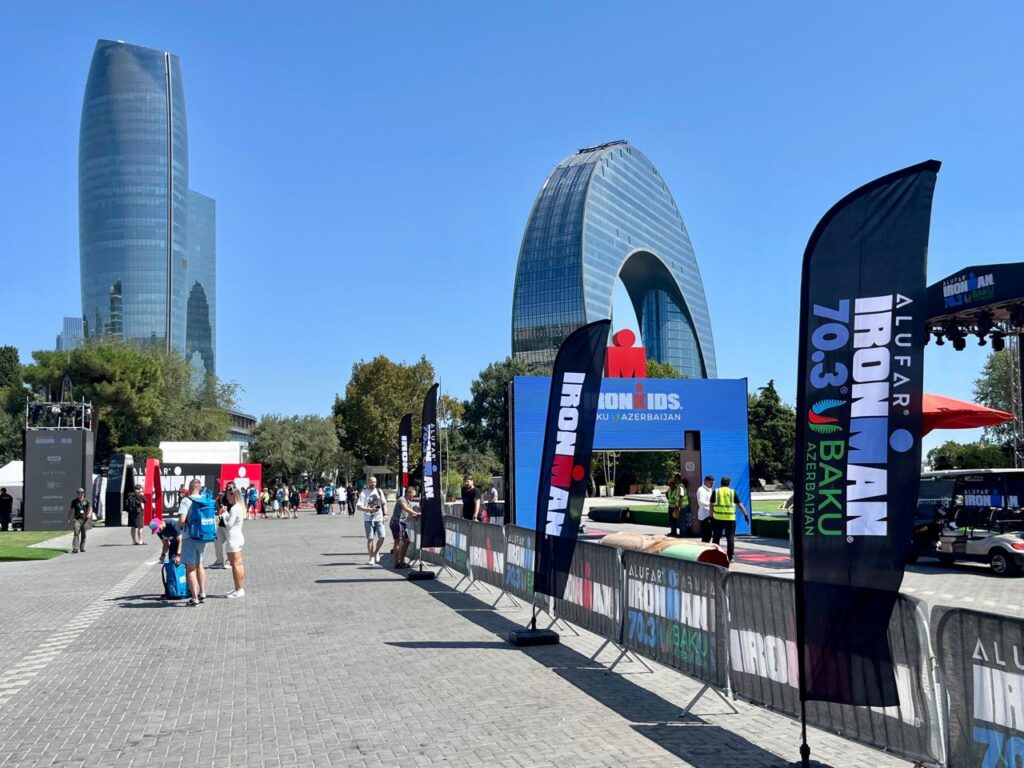
The next morning, I went for an orientation run along the nearby, long and beautiful promenade. Baku is a surprisingly green city, with many parks and recreational areas. The famous park along the seashore is even a national park. I also met the first participants and had a look at the race village, which was still being built.
In the afternoon, I explored the historic old town and enjoyed some excellent food in the almost Paris-like cafés. The following morning, I dared to cycle along Baku's coastal highway, which was part of the race course. The views over the Caspian Sea and Baku's old oil fields were impressive. You could already feel a slight breeze, which reminded me why Baku is known as the
City of Winds.
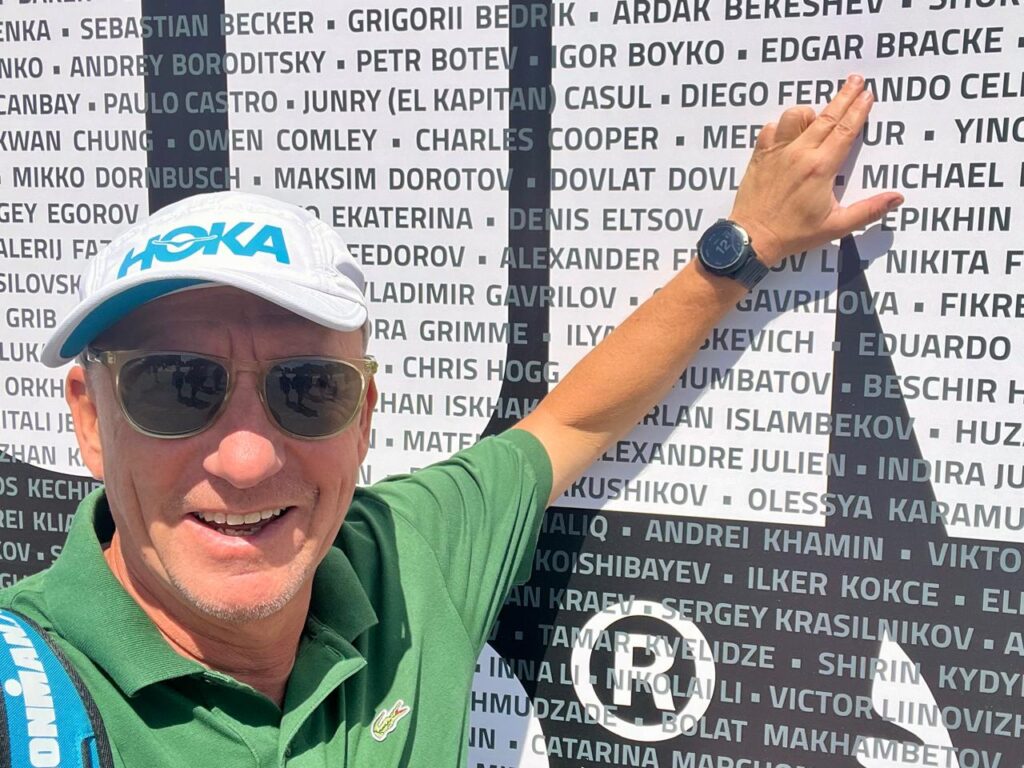
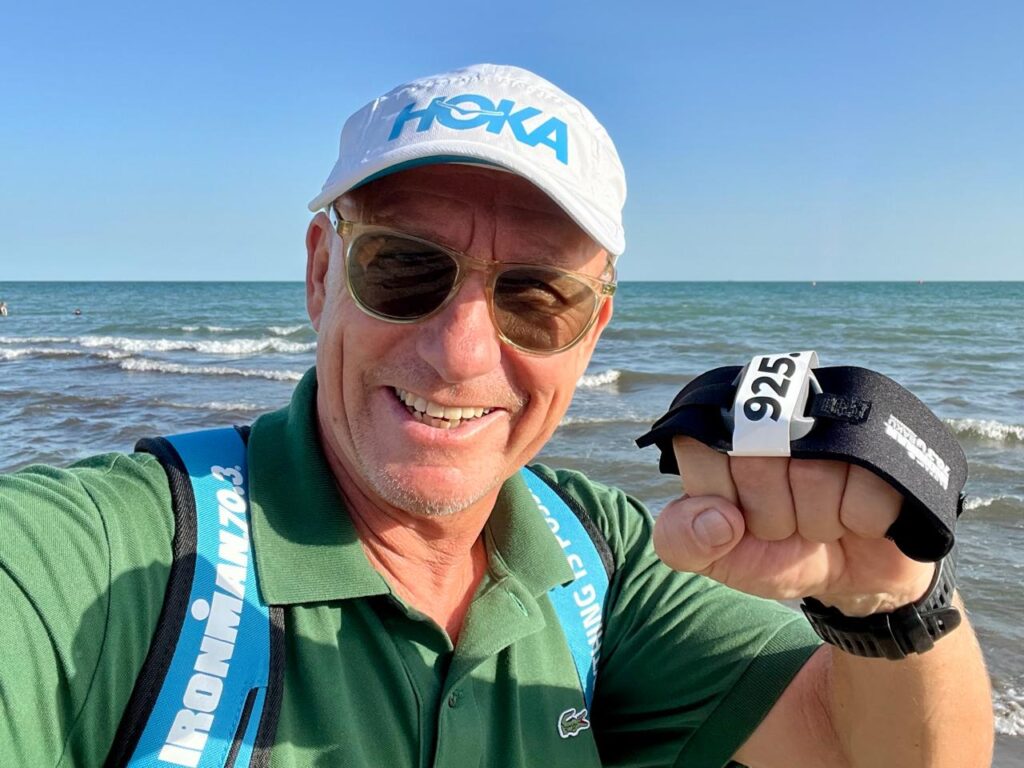
On my way to the race village, I met more and more athletes arriving from different parts of the region. The largest groups seemed to come from Russia, Kazakhstan, Azerbaijan and Kyrgyzstan. The race bag collection was quick, although the Ironman shop was already crowded. My biggest souvenir was a huge blue Ironman backpack, which turned out to be very useful for transporting my transition bags.
The unusual race logistics became more obvious when I realised that T1 and T2 were not close to the race village. They were approximately 5 and 10 kilometres away. The day before the race, many athletes were moving around the city, trying to find the promised transfer buses for bike and race-bag delivery. Unfortunately, bikes were not allowed on the buses, so many athletes
made their way along the busy coastal motorway. I decided to share a bike transporter with a family from Kyrgyzstan. Communication with the local driver in Turkish was not easy, but we safely reached the transition area. I had my first look at the swim course, then continued to T2 to deliver my red bag.
On race morning, the transfer was much easier. The buses took us directly to the swim start. With the water temperature still above 25°C, the swim was declared a non-wetsuit. That is definitely a little more exhausting, but it also meant I could take more advantage of the sensational material of my new Surpas Insane 3 race suit that felt like it doubled as a swim skin.
The atmosphere at the start line was fantastic, with everyone excited to finally get racing. The Caspian Sea tasted only slightly salty, but visibility in the water was poor, so I was happy that we had a simple rectangular course. The water was a little choppy, but there didn't seem to be too many strong swimmers around me.
T1 was quick and straightforward and led us onto the fast, mostly flat coastal bike course. There was only one short ascent to deal with several times in both directions over the two loops. Most sections were very fast, although the combination of some crosswinds and the small hills made it challenging to maintain a good pace. The faster riders were mainly on high-performance TT
bikes with all the equipment that came with them, while the marshals on their motorcycles kept a close eye on the strict non-drafting rules.
Before I knew it, I was back in T2. I changed shoes, grabbed my gels and headed out onto the run. The first five kilometres along the fast and flat promenade passed quickly, but then the heat started to make itself felt on the exposed running track. Some athletes recognized me as part of David's sported coaching group from my suit design and cheered me on. The spectators created a great atmosphere, supported by the sounds of a famous local brass band. It was a very enjoyable way to finish the race.
After 5:43 hours, I crossed the finish line and received the medal that made the whole experience feel even more worthwhile. I finished fourth in my 60-64y age group, which was a little unlucky, especially as there were question marks around the one placed 3rd’s running time results and missing T2 time. But that's ok for me, as I wasn't chasing a podium but rather aiming at a good performance for myself after so many great quality training sessions with our coaching group.
The day was not quite over yet. We still had to take the transfer shuttles all the way back to the transition areas and then cycle back with our race bags. It made for a long day, but finally the award ceremony, opened by a local dance performance group, brought everything to a memorable end.
For me, Baku was much more than just another 70.3. It was a new race in a part of the world I had never visited before, with an interesting course, welcoming people and a very different atmosphere from the races I usually do in Europe. The organisation had a few unusual challenges, but that was also part of the adventure. In the end, travelling to this fascinating and welcoming region of the world was definitely worth it.
By Edgar Bracke